
You Don’t Have a Competitive Advantage. You Had a Moment.
October 7, 2026
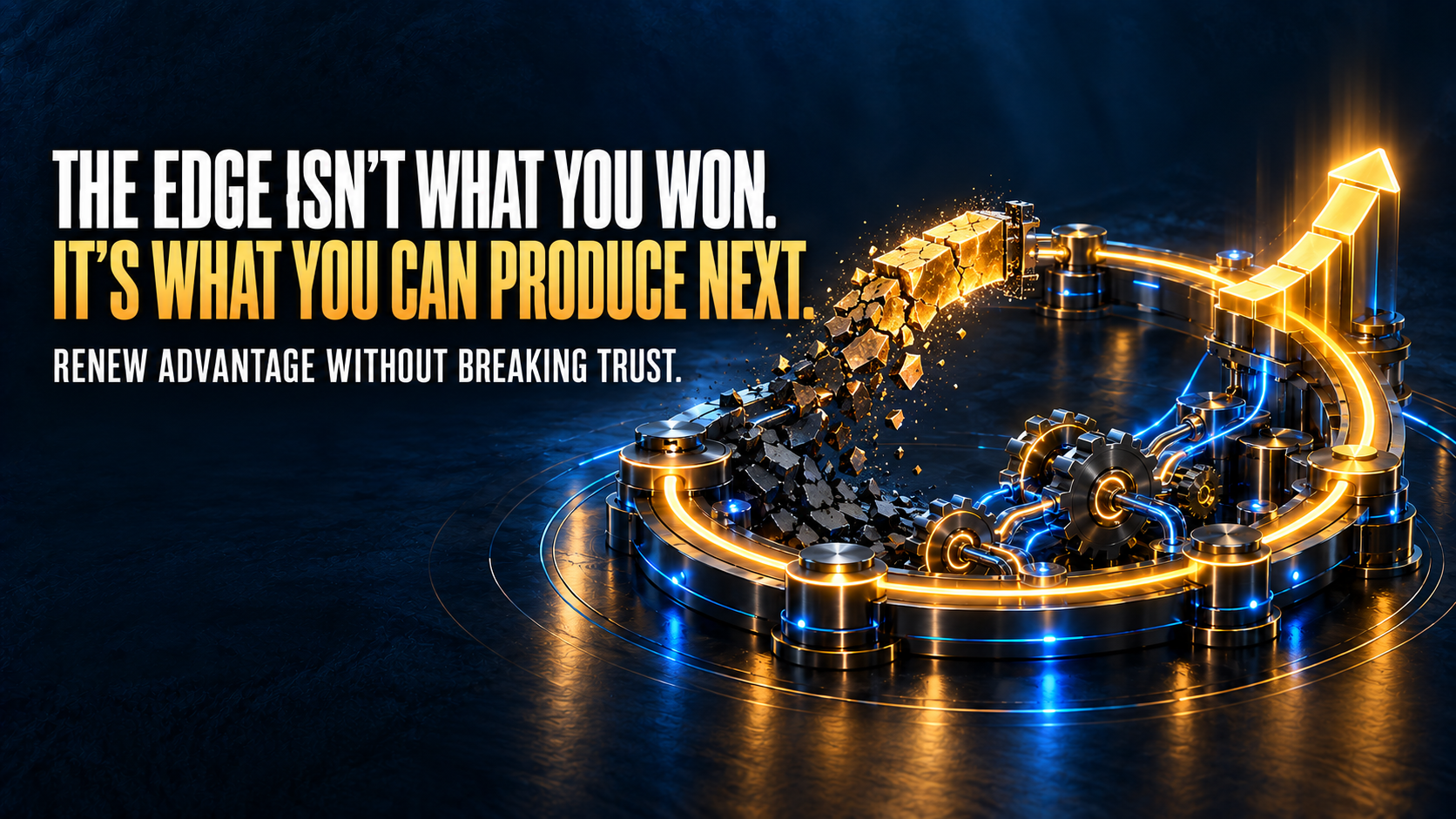
Every so often, a company gets a moment.
A breakthrough product. A pricing move that lands. An experience customers suddenly prefer. For a while they choose you, they choose you faster, and they stop comparing you to everyone else. Leadership names it what it feels like: we have a competitive advantage.
Eighteen months later, the competitors have caught up. The edge has flattened. The same customers are shopping around again, and nobody is quite sure what happened.
Here is what happened. The company thought it had a capability. What it actually had was a moment. Confusing the two is one of the most expensive mistakes in business.
A Moment of Advantage Is Not the Same as an Advantage
Competitive advantage can appear quickly. A new offer, a new model, a fresh experience, and suddenly you are the obvious choice.
That is real. But it is a result, a snapshot of one round you won. It tells you that you are ahead today. It tells you nothing about whether you will be ahead next year.
Because every advantage decays. Markets shift. Customer expectations move. Competitors study what you did and copy the parts they can. The offer that felt magical becomes the new baseline everyone meets. This is not a risk. It is gravity. Left alone, every edge erodes.
So the real question is never whether you have an advantage right now. It is whether you can keep producing one after this one fades. A moment says you won. A capability says you can keep winning. Those are completely different things, and most organizations only build the first.
The Trough Is Where Companies Actually Lose
Think of your competitive position as a cycle. There are moments of advantage, when you are winning, making bold promises, and pulling customers toward you. And there are troughs between them, the stretches where the old advantage is decaying and the next one has not arrived yet.
Almost all strategy attention goes to the moments. How to win. How to launch. How to break through. That is the exciting part.
But companies do not lose in the moments. They lose in the troughs.
The trough is where decay does its quiet work, and where the temptation to ignore it is strongest, because things still look fine on the surface. The organizations that sustain advantage treat the trough as the real job. They sense the decay early, while trust and momentum are still high, and they produce the next advantage before the old one runs out. The ones that fall behind keep celebrating the last moment until the trough hardens into a crisis, and by then their options have narrowed to bad ones.
Sustained Advantage Is a Capability, and It Runs on Trust
Sustained competitive advantage, the kind that actually holds, requires three things. The ability to keep producing advantage. The ability to hold performance as conditions change. And the ability to adapt without breaking trust.
That third one is the quiet killer, and it is where the troughs get dangerous.
When a company hits a trough and reacts late, it usually pivots under pressure. Under pressure, promises break. Commitments made to customers get walked back. Bets employees were asked to believe in get cut. Vendors who staffed up get stranded. Each broken promise spends something you cannot easily earn back: trust. And trust was what let you win in the first place. Customers chose you because choosing you felt safe. Break enough promises and it stops feeling safe.
That is why sustainability is not just about generating the next clever move. It is about generating it without burning the trust that makes any advantage possible. Do it well, and you get a loop: employees invest because your direction holds, vendors commit because you are steady, and customers stay because you keep your word even while you change. Do it badly, and every pivot leaves a scar that makes the next one harder.
Advantage is a result. Sustainability is a capability. Organizations that confuse the two win briefly, then fall behind.
Related Video: What Is Sustainable Competitive Advantage?
The Bottom Line
A moment of advantage feels like arrival. It is actually a starting gun.
The winners are not the companies with the best single moment. They are the ones who build the capability to keep producing moments, and to do it without spending the trust that made them matter. So do not ask whether you have an advantage today. Assume it is already decaying, because it is. Ask instead whether you can produce the next one, and hold your promises while you do.
That is the difference between a company that wins a round and one that stays ahead for a decade.
If you are not sure whether your competitive advantage is a durable capability or just a moment you are still coasting on, get in touch. I can help you see where your edge is quietly eroding, and what to build so you can keep producing advantage without breaking the trust that makes it real.